

A matcha latte is that vibrant, creamy green drink you see everywhere now. It’s made by whisking finely ground green tea powder into a smooth paste with hot water, then topping it off with beautifully steamed milk. It’s essentially the tea world's answer to the classic coffee latte, but it brings its own unique, rich, and slightly savory-sweet flavor to the table. This guide provides actionable insights for café owners looking to perfect their matcha offering and drive sales.
Beyond the Trend: What Is a Matcha Latte?
At its heart, a matcha latte is a beautifully simple mix of two key ingredients: high-quality matcha powder and milk. The magic is in the matcha itself. Unlike regular green tea where you steep the leaves and toss them, with matcha, you’re consuming the entire leaf, ground into a delicate powder.
This is what gives the drink its signature brilliant green color, velvety mouthfeel, and a much more concentrated dose of flavor and nutrients.
A great way to think about it is that matcha is the espresso of the tea world. An espresso shot is the potent, concentrated coffee base for lattes and cappuccinos. In the same way, a "matcha shot"—the perfectly whisked blend of powder and hot water—is the foundation for a flawless matcha latte. This one difference is what separates it from just another tea and makes it a must-have on any modern café menu.
Matcha Latte vs Coffee Latte vs Green Tea: A Quick Comparison
To really understand where the matcha latte fits in, it helps to see it side-by-side with other café staples. Each drink offers a completely different experience, from its base ingredient to its final taste.
| Attribute | Matcha Latte | Coffee Latte | Green Tea (Steeped) |
|---|---|---|---|
| Base Ingredient | Finely ground green tea leaves | Roasted & ground coffee beans | Whole or broken tea leaves |
| Caffeine | Moderate (30-70mg) | High (75-150mg) | Low (20-45mg) |
| Flavor Profile | Grassy, umami, slightly sweet | Bitter, roasted, acidic | Light, vegetal, sometimes floral |
| Preparation | Whisked into a paste, then milk | Espresso pulled, then milk | Steeped in hot water |
This table makes it clear: the matcha latte occupies a unique space, offering a balanced energy lift and a complex flavor that coffee and traditional tea just can't replicate.
The Rise of a Cafe Essential
The matcha latte is no longer a niche item; it’s a permanent fixture on menus around the globe. Its journey into the mainstream really took off after Starbucks added it to their menu back in 2006, turning it from a specialty drink into a household name.
The numbers don't lie. Today, major coffee chains purchase around 1,000 tons of matcha powder every year. Cafés and restaurants are the biggest players, driving over 60% of the global demand. This isn't just a fleeting trend—it's a direct response to customers looking for sophisticated, high-quality alternatives to coffee. The global matcha market was valued at $2.46 billion in 2025 and is expected to nearly double by 2027. You can discover more insights about the global matcha market on matcha-times.jp.
For your café, offering an exceptional matcha latte does more than just add another line to the menu. It signals that you're in tune with what customers want and that you’re committed to using premium ingredients. It attracts a dedicated crowd looking for a unique flavor and a calm, focused energy boost—without the jitters coffee can sometimes cause.
A well-crafted matcha latte isn't just a drink; it's a statement. It tells your customers that you value quality, cater to modern wellness trends, and are serious about your craft.
Ready to see how a consistently brilliant matcha can transform your menu? Contact the God of Tea team today for a sample of our performance-built Matcha 001 and expert guidance on perfecting your matcha program.
Deconstructing the Perfect Matcha Latte: The Core Ingredients
At its heart, a matcha latte is beautifully simple: just matcha and milk. But as any good barista knows, simplicity is deceptive. The real magic—the difference between a dull, bitter cup and a vibrant, unforgettable experience—lies in the quality of those two ingredients. Let's break down the actionable choices you need to make.
It all starts with the matcha itself. Not just any green powder will do. You'll see terms like "latte grade" thrown around, but this isn't just marketing fluff. It signifies a very specific quality designed to stand up to milk, not get drowned out by it.
A true latte-grade matcha, like our Matcha 001, has a specific pedigree. It comes from first-harvest tea leaves—the youngest, most tender leaves from the very start of the growing season. These leaves are packed with L-theanine, the amino acid that gives matcha its signature savory-sweet umami flavor and its uniquely calming focus. They're also shade-grown for weeks before being picked, a process that ramps up chlorophyll production and creates that stunning, jewel-toned green your customers are looking for. Finally, they're stone-milled into a powder so fine it feels like silk, which is the key to a smooth, creamy latte without any grit.
The Art of Milk Pairing
Once you’ve got your matcha sorted, the next crucial decision is the milk. This isn't a one-size-fits-all situation; different milks create completely different drinks. Your action is not to find the "best" milk, but to create a perfect partnership that delights your customers.
- Whole Dairy Milk: This is the classic choice for a reason. Its fat content creates a rich, luxurious texture that beautifully complements matcha’s earthy notes, while the natural sweetness from lactose smooths over any hint of bitterness.
- Oat Milk: It’s the reigning champ of plant-based milks, and deservedly so. Oat milk is creamy, and its flavor is neutral enough to let the matcha’s complex character shine through without getting in the way.
- Almond Milk: A great lighter option that lets the tea be the star of the show. The subtle nuttiness can add a nice dimension, but be sure to use a high-quality, creamy brand to avoid a thin, watery result.
The secret to a truly exceptional matcha latte is synergy. The matcha needs to be bold enough to hold its own, while the milk should be a supporting actor, enhancing texture and flavor without stealing the spotlight.
Nailing this balance is what sets a great café apart. With customers demanding both traditional and plant-based options, having a versatile matcha that performs beautifully with any milk isn't just a nice-to-have—it's essential.
Ready to see how a matcha built for performance can elevate your lattes? Contact us for a sample of God of Tea Matcha 001 and taste the difference for yourself.
Mastering the Craft: Barista Techniques for a Flawless Drink
Having great ingredients is one thing, but turning them into an exceptional matcha latte? That's where the craft comes in. This is about more than just following a recipe; it’s about developing a feel for the process to create that perfectly balanced, velvety drink your customers will come back for.
Before you even think about milk, three steps are non-negotiable. First, precise dosage. Nail your matcha-to-water ratio and stick to it for consistency. Second, watch your water temperature. Anything over 175°F (80°C) will scald the delicate powder, leaving you with a bitter, unpleasant taste. And finally, always, always sift your matcha. It’s the only way to guarantee a silky, clump-free start.
Choosing Your Whisking Method
With your matcha prepped, it's time to create the "matcha shot"—a smooth, concentrated paste that will be the heart of your latte. In a café setting, you really have two solid options for this.
- Traditional Bamboo Whisk (Chasen): There's a reason this is the classic tool. A chasen’s delicate tines are perfect for aerating the matcha and suspending the particles evenly, creating a beautiful, light froth. It’s a bit of theater and shows real craftsmanship.
- High-Speed Electric Frother: Let's be real, during a busy morning rush, speed is everything. A powerful electric frother gets the job done in seconds, creating a perfectly smooth, homogenous mixture every single time. It's the workhorse of a high-volume café.
The end goal is the same for both: a perfectly integrated matcha base, ready for milk. While the chasen has its charm, an electric frother usually wins out for pure efficiency behind the bar.
This diagram breaks down the two simple, yet critical, components that make up a matcha latte.
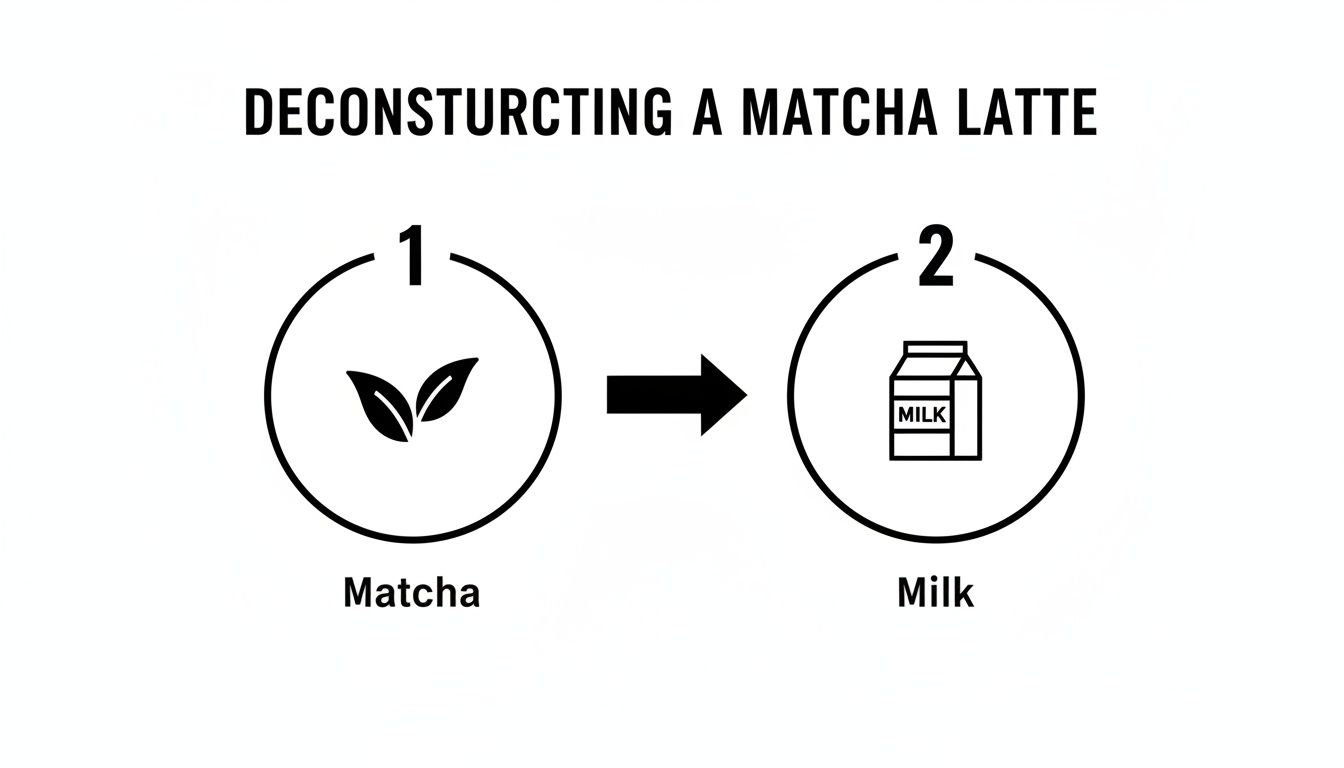
As you can see, with only two core parts, the quality of each one makes all the difference.
The Secret to Silky Microfoam
The final element that truly makes a matcha latte sing is the milk. We're not aiming for stiff, bubbly foam here. The goal is silky microfoam—that glossy, velvety texture with tiny, uniform bubbles that pours like wet paint. You get this by aerating the milk just until the pitcher feels warm to the touch, then sinking the steam wand to create a smooth, spinning vortex.
Perfectly steamed milk does more than just look good for latte art; it actually tastes sweeter. The microfoam should blend seamlessly into the matcha base, creating one unified drink, not a layer of foam sitting on top of green tea.
Nailing this texture not only gives you an Instagram-worthy pour but ensures the drink is creamy and consistent from the first sip to the last. Mastering these details—from dosing and whisking to steaming that perfect microfoam—is what elevates a basic drink into a true menu standout.
Ready to give your baristas a matcha designed for consistency and quality? Get in touch with the God of Tea team for a sample of Matcha 001. See for yourself how it can simplify your workflow and keep your customers happy.
Get Creative: Building a Matcha Menu That Sells
Once you’ve nailed the classic matcha latte, the real fun begins. This is where you move from having a single popular drink to building a full-fledged, revenue-driving matcha program. A truly high-quality matcha base is your secret weapon here—it has a clean, complex flavor that can carry other ingredients instead of being overwhelmed by them.
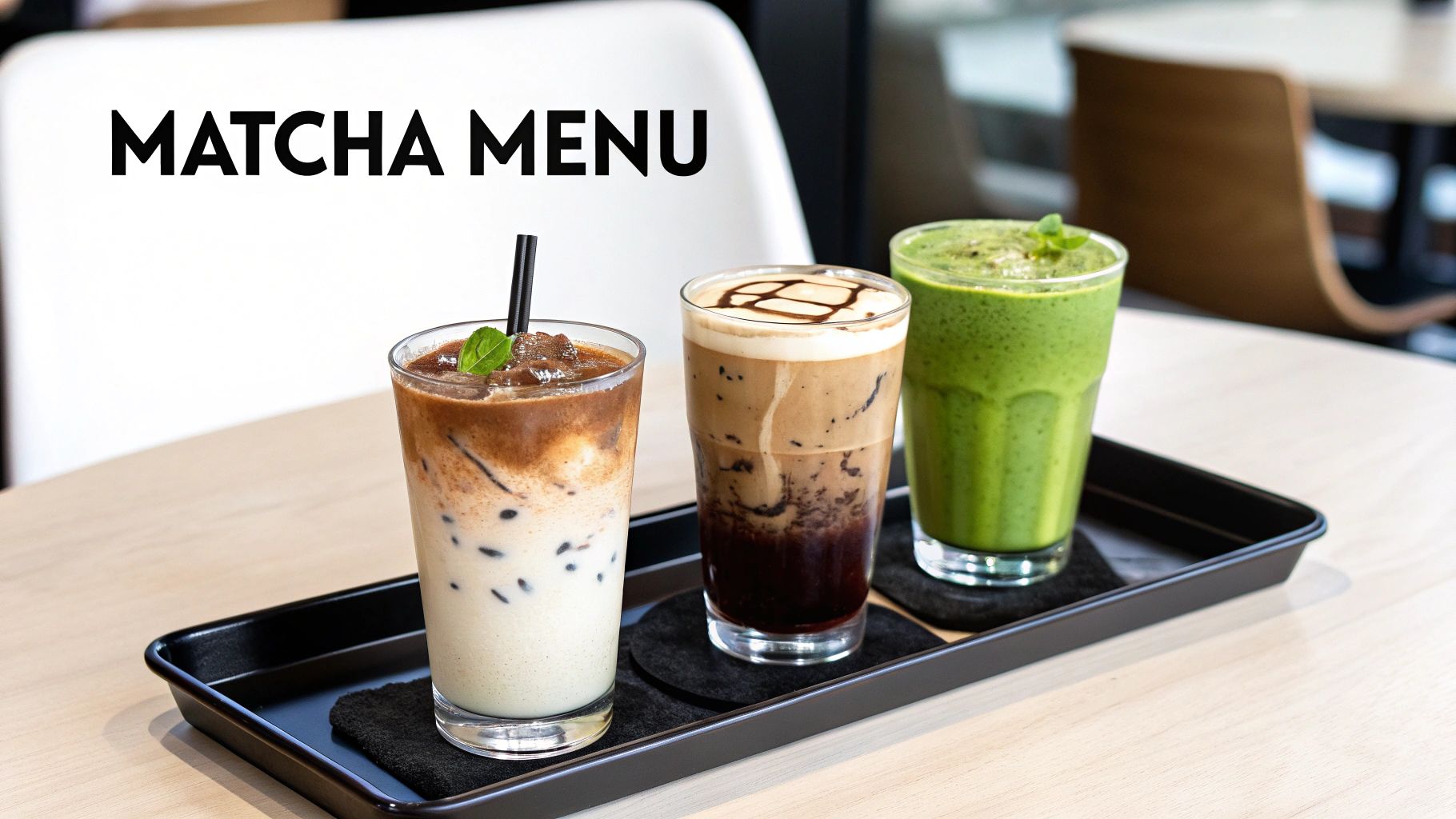
And believe me, your customers are ready for it. The market is hungry for new twists on this classic. We’ve seen searches for "flavored matcha drinks" jump by over 180% recently, a trend that’s only going up as younger customers look for unique drinks to share. You can explore more insights on the flavored matcha trend to see just how big the opportunity is. This is your playbook for tapping into that demand.
Going Beyond the Standard Latte
Expanding your matcha menu is probably easier than you think. It's all about thoughtful pairings that complement—not cover up—matcha’s natural grassy, umami character.
Here are a few popular and profitable variations to get you started:
- Flavored Lattes: Think subtle and sophisticated. Floral notes like lavender or rose add an elegant touch. For seasonal specials, a pumpkin spice matcha in the fall or a peppermint matcha during the holidays can become the limited-time offers your regulars wait all year for.
- The Dirty Matcha: This is the ultimate crossover drink for your coffee die-hards. A shot of good espresso poured over a matcha latte (hot or iced) creates a powerful, layered drink with a serious caffeine kick.
- The Iced Matcha Latte: An absolute must-have, especially when it gets warm. The trick here is in the prep—make sure you fully suspend the matcha in a little warm water before adding cold milk and ice. This simple step prevents those dreaded clumps.
A superior matcha base, like God of Tea's Matcha 001, is the foundation for innovation. Its robust flavor and creamy body ensure that even when you add espresso or syrups, the signature matcha character still shines through, protecting the integrity of the drink.
Crafting Your Signature Matcha Menu
Creating a signature drink is what will make your café the spot for matcha. Go beyond basic syrups and start thinking about unique textures and flavor combinations that create a truly memorable experience.
A Strawberry Matcha Latte, for instance, made with a house-made strawberry purée, is a showstopper both in flavor and on Instagram. Or, a Honey Lavender Matcha Latte offers a calming, aromatic profile that taps right into matcha's wellness appeal.
The goal is simple: create drinks that are not only delicious but also visually stunning. Every unique creation becomes a mini-advertisement for your shop, reinforcing your reputation for quality and creativity. Of course, this all relies on a matcha powder that delivers that vibrant color and consistent flavor, every single time.
Ready to build a matcha menu that captivates customers and boosts your bottom line? Contact our team for a sample of Matcha 001 and discover a matcha built for creativity.
Why Your Matcha Supplier Is Your Most Important Partner
You can spend all day perfecting your whisking technique and dreaming up new menu items, but none of it matters without the right foundation. The single most important decision you'll make for your matcha program isn't the recipe—it's the supplier you choose. Think of them less as a vendor and more as a silent partner. They are the invisible hand behind every matcha latte you serve, with a direct line to your reputation and your bottom line.
Forget flavor for a moment. A truly successful matcha program rests on three pillars that only a dedicated, high-quality partner can deliver: rock-solid consistency, proven safety, and an unbreakable supply chain. When you have these locked down, you’re free to do what you do best: grow your business and delight your customers.
The Power of Consistency
Picture this: a customer tries your matcha latte and falls in love with its vibrant green hue and creamy, sweet flavor. They come back a week later, excited for another, only to be served a dull, bitter disappointment. That kind of inconsistency is a brand killer. A specialty supplier provides what we call performance-built matcha—a product specifically engineered to deliver the same amazing results, every single time.
Your supplier’s commitment to quality control is a direct investment in your customer loyalty. When the product is consistent, your customer's experience is consistent, and that trust is what brings them back time and again.
This means your baristas can stick to one recipe and pull a perfect shot of matcha day in and day out. It’s how you protect your café’s hard-earned reputation, one cup at a time.
Prioritizing Safety and Peace of Mind
Let’s be honest, today's customers are savvy. They care about what they're putting into their bodies and trust you to serve something that’s not just delicious, but genuinely safe. A premier supplier gets this. They don't just talk about quality; they prove it with rigorous third-party testing for things like pesticides and heavy metals.
This isn't just about a piece of paper. It’s a promise to you and your customers. It gives you the confidence to stand behind your menu and answer any question with total certainty, building a layer of trust that a generic, off-the-shelf brand can never provide.
Building a Reliable Supply Chain
The secret is out—high-quality matcha is in huge demand. The matcha latte powder market is projected to skyrocket to $9,233.89 million by 2033, and with tight supply, procurement costs are already climbing 3-5% every year. You can learn more about these matcha industry trends in the full market analysis. In this climate, running out of your star ingredient simply isn't an option.
This is where a true partner like God of Tea makes all the difference. We built our supply chain to be unshakable, ensuring our signature Matcha 001 is always in stock and ready to ship. Your menu should never have to suffer because your supplier dropped the ball. A great partner doesn’t just sell you a product; they provide the consistency, safety, and reliability you need to build a world-class beverage program.
Ready to see how a strategic partnership can secure your success? Contact us today to discuss how we can support your café’s growth.
Your Top Matcha Latte Questions, Answered
We’ve covered the essentials of what goes into a great matcha latte, from the right ingredients to the perfect technique. But in a real café setting, questions always pop up. Here are answers to some of the most common ones we hear from baristas and shop owners, designed to help you and your team become true matcha experts.
How Does the Caffeine in a Matcha Latte Compare to Coffee?
A typical matcha latte has about 70mg of caffeine, putting it below the 95-165mg you'd find in a standard cup of coffee. But that's only half the story. The real magic of matcha comes from an amino acid called L-theanine.
L-theanine partners with caffeine to create a unique effect: calm, focused energy. It smooths out the stimulant kick, so customers get a clean, sustained lift without the jitters or the dreaded afternoon crash that often comes with coffee. It's a completely different kind of energy boost.
My Matcha Latte is Clumpy and Bitter. What Am I Doing Wrong?
If you're dealing with clumps and bitterness, don't worry—these are the two most common hurdles, and they're easy to fix once you know the cause.
- Clumps almost always happen when the matcha powder isn't sifted or properly dissolved into a paste with hot water first. It just can't suspend evenly in the milk otherwise.
- Bitterness is a classic sign of burnt tea. Using water hotter than 175°F (80°C) will scorch the delicate matcha, killing its natural sweetness and leaving a harsh aftertaste.
Of course, if you’re starting with a low-quality, culinary-grade powder, you'll fight an uphill battle with bitterness no matter how flawless your technique is.
The fix is all about consistency: Sift your powder every time, use water at the right temperature, and, most importantly, start with a high-quality matcha designed for lattes.
Can I Make a Great Matcha Latte Without a Bamboo Whisk?
You absolutely can. While the traditional bamboo whisk (the chasen) is a beautiful part of the matcha ritual, it isn't always the most efficient tool for a busy café workflow.
A small, powerful handheld electric frother is a fantastic alternative. It can whip up a silky, clump-free matcha base in a fraction of the time, ensuring every drink is perfect, even when you have a line out the door. The goal is to get those tiny tea particles fully suspended in water, and modern tools get the job done quickly and reliably.
Is Premium Matcha Really Necessary for a Latte?
Yes, without a doubt. It is the single most important factor in the quality of your finished drink, and it's an investment that pays for itself.
Many lower-end, culinary-grade matchas are dull, yellowish-green and have a flat, bitter profile that you have to mask with a ton of sugar. A true latte-grade matcha is in a different league entirely. It’s been specifically chosen and milled to deliver a vibrant, emerald-green color that pops against the milk, a complex umami-sweet flavor that isn't easily buried, and a luxuriously creamy mouthfeel.
Choosing a premium, performance-built matcha is what allows you to create a drink that stands out. It’s what justifies a higher price point, earns you a reputation for quality, and gives your customers an experience they’ll come back for again and again.
Ready to see the difference a truly exceptional matcha can make on your menu? The team at God of Tea is here to help. We sourced and perfected a single, high-performance matcha so your baristas can deliver consistency, vibrant color, and incredible flavor in every single cup.
Contact us today to request a sample of Matcha 001 and start building a better beverage program.
0 comments