
If you've opened an invoice from your matcha supplier recently and felt your stomach drop, you're not alone. Across NYC, café owners are watching their costs climb while availability shrinks. What's going on—and more importantly, what can you do about it?
Here's what you need to know about the matcha market in 2025, and why savvy café operators are reconsidering where they source their supply.
The Perfect Storm: Three Forces Colliding
The current matcha crisis isn't the result of a single problem. It's three decades of slow-building pressure finally reaching a breaking point.
An Aging Workforce
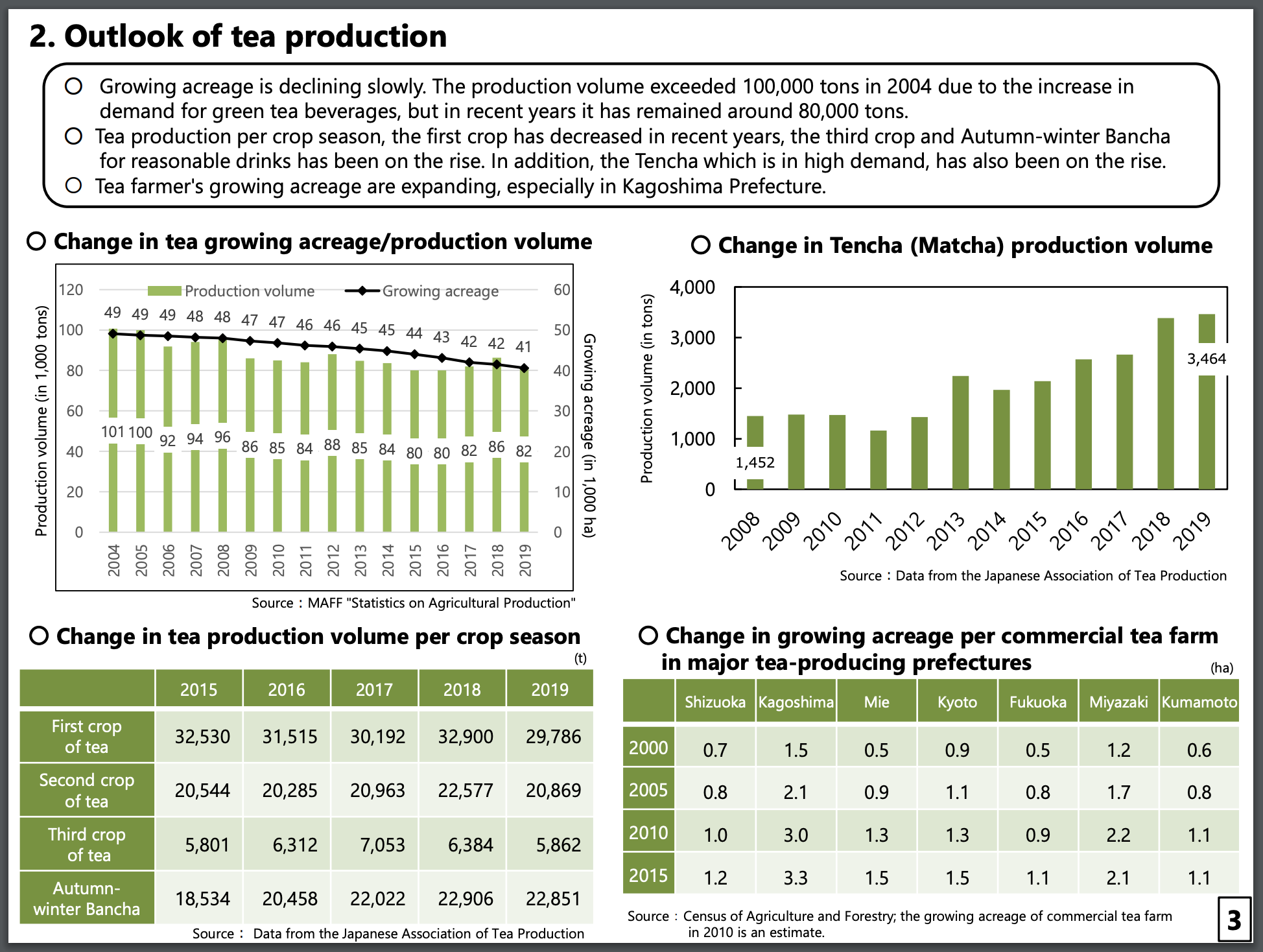
Japan's tea farming population is disappearing. More than half of the country's tea farmers are over 65 years old, and between 2000 and 2015, the number of commercial tea-producing households dropped by 62%. Younger generations are moving to cities, leaving fewer hands to tend the labor-intensive tea fields. Matcha production is particularly demanding—the shade-growing, careful harvesting, and meticulous stone-milling require skills passed down through generations. When these farmers retire, their expertise often retires with them.
The Global Japanese Tea Association reports that 37% of Japan's tea farmland has bushes over 30 years old, which impacts both yield and quality. Fields once covered in carefully shaded tea plants are being abandoned or converted to other crops.
Climate Chaos
Japan experienced its hottest June and July on record in 2025, with temperatures nearly 3°C above normal. For tea plants, which are extremely sensitive to heat, this is devastating. The Kyoto region—which accounts for about 25% of Japan's tencha production (the raw material for matcha)—was hit particularly hard by intense heatwaves during the critical April-May harvest window.
One Kyoto farmer reported that last summer's intense heat damaged his bushes, cutting his typical 2-tonne yield by 25%. Rising temperatures don't just reduce quantity; they alter the chemical composition of the leaves, diminishing the umami flavor that defines premium matcha.
Spring is arriving earlier and warmer, pushing forward the critical shading period. Sudden rainfalls during harvest season damage delicate buds. Even a few degrees of heat stress can compromise the distinctive taste of top-grade matcha.
Social Media Supercharges Demand
Meanwhile, on the demand side, TikTok happened. Videos tagged #Matcha have accumulated over 15 billion views, transforming an ancient ceremonial drink into Gen Z's beverage of choice. The green powder has become synonymous with the "clean girl" aesthetic, wellness culture, and Instagram-worthy mornings.

Retail matcha sales in the U.S. increased 86% over three years. New high-spending markets—including the UAE and Saudi Arabia—have joined traditional U.S. and European buyers. As one Japanese tea merchant noted, "Due to incredible purchasing power and demand from around the world, almost all Japan's matcha is exported overseas."
The result? Japan simply cannot keep up.
The Numbers: What's Actually Happening to Prices
The data tells a stark story.
According to JA Kyoto, the average price for first-flush tencha rose from ¥5,500/kg in 2024 to ¥14,333/kg in 2025—a 265% increase. Ippodo Tea, the 300-year-old Kyoto institution, announced that the average market price for matcha this year soared to about 2.7 times last year's levels.
For wholesale buyers in the U.S., the picture is even more complicated. One Austin café owner reported that matcha that cost $17-$25 per 20-gram bag last year now costs $50-$56—before shipping, tariffs, and packaging.
Some suppliers have simply stopped selling. Japanese stores have implemented purchase limits. Online scalpers are now hawking matcha at inflated prices, prompting producers like Marukyu Koyamaen (a 300-year-old Kyoto company) to publish growing lists of unauthorized resellers.
Why This Won't Get Better Anytime Soon
Here's the uncomfortable truth: there's no quick fix.
Tea bushes take approximately five years from planting to reach maturity. Even as the Japanese government offers subsidies to farmers to switch from leaf tea to matcha production, new supply won't materialize until 2030 at the earliest.
The structural problems—aging farmers, climate instability, urbanization pulling young people away from agriculture—aren't reversible on any meaningful timeline. The Japan Ministry of Agriculture reports tea cultivation area has decreased 25% in just 17 years. That trend is accelerating, not slowing.
Every month between now and the next spring harvest, the supply situation will get tighter as fixed inventory gets consumed.
The Alternative: Looking Beyond Japan
For café operators watching their margins evaporate, the natural question is: what about matcha from other origins?
The Honest Truth About Chinese Matcha
Let's be direct: China produces a lot of bad matcha.
The country is vast, quality control is inconsistent, and the global matcha boom has attracted plenty of opportunistic producers rushing product to market. Walk through Alibaba and you'll find "ceremonial grade" matcha at prices that should raise immediate red flags. Much of it is sun-grown, rapidly processed, and bears little resemblance to the real thing.
This is why most specialty tea buyers have historically avoided Chinese matcha entirely. The risk of inconsistent quality, questionable sourcing, and products that don't perform in a café environment has been too high.
But here's what's also true: China is where matcha originated.
Matcha's roots trace back to China's Tang Dynasty (7th-10th century). The techniques were later brought to Japan by Buddhist monks, where they evolved into the ceremonial tradition we know today. And in certain regions—particularly the high-altitude areas of Guizhou Province—the terroir closely mirrors the conditions that made Uji famous: misty climates, well-drained soil, and cool mountain air.

The question isn't whether good Chinese matcha exists. It does. The question is whether you can find it.
Why Finding Quality Is So Hard
The challenge is that quality Chinese matcha represents a tiny fraction of total production. Unlike Japan, where matcha commands premium prices and careful cultivation is the norm, the Chinese market has been dominated by industrial-scale operations focused on volume over craft.
Finding a grower who follows true ceremonial-grade practices—proper shade-growing for 20+ days, first-harvest leaves only, precision milling that preserves flavor and color—requires significant vetting. Most buyers don't have the time, relationships, or expertise to navigate it.
When we started God of Tea, we spoke with over 200 vendors across China before finding our grower. The vast majority were immediately disqualified: inconsistent shade-growing practices, no third-party testing, poor traceability, or product that simply didn't perform in latte applications.
What We Found
Our grower is the longest-standing matcha producer in Guizhou Province, with Japanese roots in their cultivation methods and processing techniques. Their facility uses Japanese equipment. Their shading protocols, harvest timing, and milling processes follow the same standards that define quality Japanese matcha.
The difference isn't the country of origin—it's the rigor of production.
What defines true ceremonial grade:
- Deep, vibrant green color (indicating high chlorophyll from proper shading)
- Silky, fine texture (particle size of 10-20 microns)
- Balanced umami flavor with sweetness and minimal bitterness
- Strong performance in milk-based drinks (the "latte test")
These markers are achievable with proper cultivation and processing, regardless of geography. The challenge is finding producers who actually meet them—and verifying that they do, batch after batch.
The Business Reality
For cafés where 90%+ of matcha drinks are lattes, tonics, and other mixed preparations, what matters is consistency, flavor profile, and how the powder performs in your menu items.
Japanese origin carries cachet with consumers, and for ceremonial preparation served to purists, that provenance may matter. But for the iced oat milk matcha latte that outsells everything else on your menu? What matters is color, flavor, and reliability—not the name on the package.
The economics are worth considering. While Japanese ceremonial grade matcha from premium suppliers now runs $300-$400 per 500g (when you can get it), carefully sourced Chinese ceremonial grade can offer equivalent café performance at substantially lower price points.
For a café using 4-5 bags per month, the annual savings can be upwards of $7,000 per year—money that goes directly to your bottom line or can be reinvested in your business.
How God of Tea Approached This Problem
We didn't start God of Tea because we thought Chinese matcha was an easy answer. We started it because we believed—after extensive research—that it could be a good answer, if done right.
That meant doing the work most importers won't do: visiting facilities, testing samples, verifying certifications, and walking away from vendors who couldn't meet our standards. Out of 200+ conversations, we found one grower we trusted.
Our Matcha 001 comes from Guizhou's longest-standing matcha producer—a facility with Japanese roots in their methods, Japanese equipment in their processing, and a track record that predates the current matcha boom. Every batch is:
- Hand-picked from first harvest leaves
- Shade-grown for 20+ days using traditional protocols
- Stone-milled in small batches for vibrancy and texture
- Third-party tested for 600+ pesticides, heavy metals, and radiation
We're not claiming it's identical to high-end Uji matcha. We're claiming it performs exceptionally in café applications—the lattes, the iced drinks, the tonics that make up the vast majority of your matcha menu—at a price point that makes sense for your business.
For NYC cafés, we offer:
- 5-day delivery, always in stock
- Barista training to ensure your team nails every drink
- Price stability because we're not competing for dwindling Japanese inventory
What NYC Café Owners Should Do Now
If you're currently dependent on Japanese matcha, here's a pragmatic approach:
-
Run the numbers. Calculate your actual cost-per-drink at current prices versus what you were paying 18 months ago. Factor in waste, inconsistent supply, and the time you spend chasing inventory.
-
Request samples. Get ceremonial grade Chinese matcha from reputable suppliers and do a blind taste test. Have your baristas make lattes side-by-side. You may be surprised.
-
Think about your customers. For ceremonial preparation served to purists? Japanese origin may matter. For the iced oat milk matcha latte that outsells everything else on your menu? What matters is color, flavor, and consistency—not provenance.
-
Secure your supply. Whether you switch vendors or not, understand that the Japanese matcha shortage is real, it's worsening, and waiting lists are growing. Don't assume your current supplier can guarantee fulfillment.
The cafés that thrive through this disruption will be the ones that adapt. The ones that struggle will be those who assume the old model will somehow return.
Ready to Talk?
We're offering free samples to NYC café operators who want to experience Matcha 001 for themselves. No pressure, no gimmicks—just a chance to taste what price stability and supply reliability can look like.
God of Tea supplies ceremonial grade matcha to cafés across NYC. We believe great matcha should be accessible, consistent, and sustainable—for your business and your customers.
0 comments